
Virtual Nursing Assistants vs. Medical Scribes: Which Does Your Clinic Need?
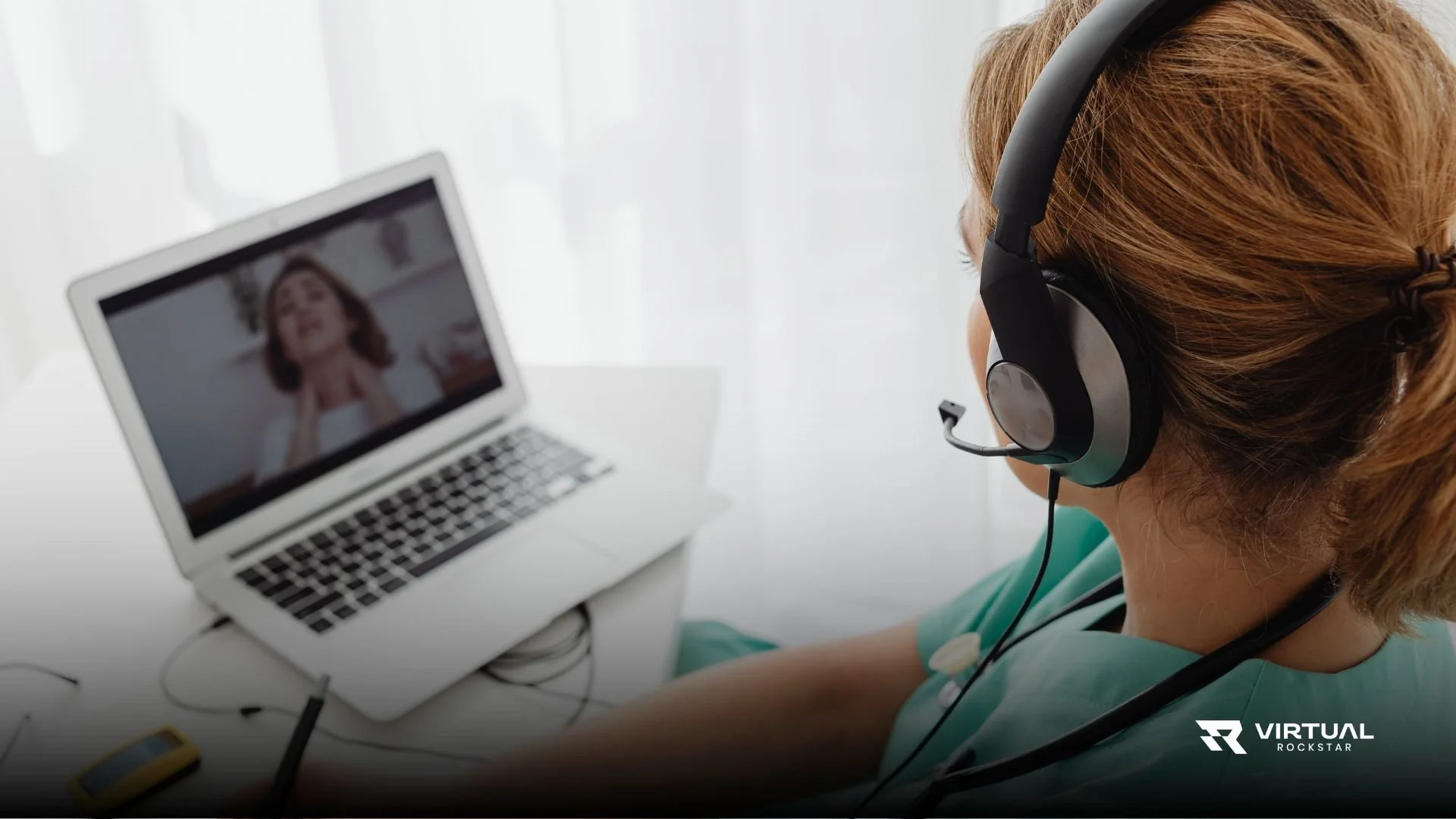
If you're running a busy outpatient clinic, you've probably hit a point where you're drowning in documentation while trying to actually care for patients. The administrative burden has become so overwhelming that you're spending more time staring at a computer screen than looking at the person sitting in front of you.
You know you need help. But what kind of help?
The terms virtual nursing assistants and medical scribes get thrown around a lot, sometimes interchangeably, sometimes as distinct roles. And if you're trying to figure out which one your clinic actually needs, the confusion is understandable.
Let's clear this up. These are different roles that solve different problems, and understanding the distinction will help you make the right choice for your specific situation.
Understanding What Each Role Actually Does
Before we can compare these positions, we need to define what we're talking about. Because the terminology in healthcare staffing can be genuinely confusing.
What Medical Scribes Do
A medical scribe is someone who documents patient encounters in real time or shortly after the visit. They accompany you during patient appointments (either physically or virtually) and handle the documentation so you can focus on the clinical interaction.
Their primary responsibilities include:
Documenting patient history and chief complaints as you gather them
Recording physical examination findings as you perform them
Entering diagnosis codes and treatment plans as you articulate them
Completing charts in your EHR according to your specifications
Preparing documentation for signature and review
The core value proposition? You talk, they type. You examine and treat, they document. You maintain eye contact with patients instead of staring at a screen.
Medical scribes don't make clinical decisions, provide patient care, or work independently. They're an extension of you during the patient encounter, capturing what happens in real time.
What Virtual Nursing Assistants Do
Virtual nursing assistants handle a broader range of clinical support tasks that don't require physical presence but do require healthcare knowledge and judgment.
Their responsibilities typically include:
Pre-visit chart preparation and review
Patient intake and history gathering before the provider enters
Medication reconciliation and review
Patient education and discharge instructions
Care coordination and follow-up calls
Triage support for patient calls and portal messages
Prior authorization clinical documentation support
Care gap identification and outreach
Virtual nursing assistants work more independently than scribes. They're handling clinical support tasks that free up providers and in-clinic nursing staff but don't require direct oversight during every patient interaction.
Think of it this way: a medical scribe shadows you during visits. A virtual nursing assistant supports your practice's clinical operations more broadly.
The Problems Each Role Solves
Understanding which role you need starts with identifying your primary pain point.
When Medical Scribes Make Sense
You need a medical scribe if your main problem is documentation burden during patient visits.
Specifically, consider a scribe if:
You're spending the entire patient visit typing instead of engaging with patients
You're regularly staying late to finish charts because you can't complete them during the day
Patient satisfaction scores indicate people feel you're not listening or engaged
You're experiencing burnout primarily related to EHR documentation demands
Your visit volume is constrained by how fast you can document, not by your clinical capacity
Your reimbursement is suffering because documentation is inadequate or incomplete
Medical scribes solve a very specific problem: they get you out of the computer and back to patient-centered care. If documentation is your bottleneck, a scribe is likely your answer.
When Virtual Nursing Assistants Make Sense
You need a virtual nursing assistant if your problem is broader clinical support and coordination challenges.
Consider a virtual nursing assistant if:
Your nurses are overwhelmed with administrative tasks and can't focus on patient care
Patient calls and portal messages are going unanswered or creating long delays
Pre-visit preparation isn't happening, making appointments less efficient
Care coordination and follow-up are falling through the cracks
Your team needs help with medication reconciliation and patient education
Prior authorization clinical documentation is creating bottlenecks
You need triage support but can't afford another full-time nurse
Virtual nursing assistants solve operational and coordination challenges that affect your entire practice flow, not just the documentation moment.
Skills and Training Requirements
These roles require different skill sets and training backgrounds.
Medical Scribe Qualifications
Effective medical scribes need strong typing speed and accuracy, excellent listening and comprehension skills, knowledge of medical terminology, understanding of anatomy and physiology, familiarity with your specific EHR system, and ability to work efficiently under time pressure.
Many scribes are pre-med students or others planning healthcare careers who want clinical exposure. They don't need nursing licenses or extensive clinical experience, but they do need to understand what they're hearing and documenting.
Training typically takes two to four weeks to get a scribe up to speed on your documentation preferences and EHR workflows.
Virtual Nursing Assistant Qualifications
Virtual nursing assistants typically have nursing backgrounds or equivalent healthcare training. In the Philippines, many are trained nurses who've transitioned to virtual support roles.
They bring clinical knowledge and judgment, patient communication skills, care coordination experience, understanding of clinical workflows, and ability to work independently within defined protocols.
Training focuses less on basic clinical knowledge (they already have that) and more on your specific practice protocols, systems, and preferences. Initial training typically takes three to six weeks.
Technology and Implementation Considerations
Getting these roles up and running requires different technological approaches.
Implementing Medical Scribes
For in-person scribes, you need physical workspace, a computer with EHR access, and integration into your patient flow.
For virtual scribes, you need secure audio/video connection to the exam room, reliable internet connectivity, headsets or speakers that work well, and systems to manage ambient noise and patient privacy concerns.
Some practices use specialized scribe platforms that integrate with their EHR. Others simply have scribes log directly into the EHR system during visits.
The technical challenge with virtual scribes is ensuring they can hear clearly without patients feeling uncomfortable being recorded or observed remotely.
Implementing Virtual Nursing Assistants
Virtual nursing assistants need secure access to your EHR system, HIPAA-compliant communication tools for patient contact, phone system access for making and receiving calls, and any clinical decision support tools your practice uses.
Because they're not working in real-time during patient visits, the technology requirements are more straightforward. They need the same system access your in-clinic nurses use, just configured for secure remote access.
Most modern EHR systems support remote access natively, making implementation relatively seamless from a technology perspective.
Impact on Clinical Workflow
These roles affect your daily operations differently.
How Medical Scribes Change Your Day
With a medical scribe, your patient encounter workflow changes significantly. Instead of pausing to type while patients wait, you have a continuous conversation. You examine patients while verbalizing findings for the scribe to document.
Your appointments may actually move faster because you're not context-switching between clinical interaction and documentation. Many providers report being able to see more patients per day with a scribe without feeling more rushed.
The adjustment period involves getting comfortable talking through your thought process and documentation preferences while still connecting with patients. Some providers take to this naturally; others find it awkward initially.
How Virtual Nursing Assistants Change Your Day
With a virtual nursing assistant, you might not directly interact with them during patient visits at all. Instead, you notice that charts are already prepped when you open them. Patient intake information is already complete. Follow-up tasks you'd usually have to remember to do are already handled.
Your in-clinic nursing staff has more time for direct patient care because they're not buried in administrative tasks. Patient calls get returned promptly. Care coordination happens systematically.
The workflow change is less about how you conduct visits and more about the support infrastructure around those visits becoming more robust.
Patient Experience Considerations
Both roles affect how patients experience your practice, but differently.
Patient Perception of Medical Scribes
Some patients initially find it odd having an additional person in the exam room documenting the encounter. Most adjust quickly once you explain the scribe's role and how it allows you to focus more attention on them.
Virtual scribes (present via tablet or screen) can feel even stranger to patients at first. Clear communication about their purpose and proper introduction helps normalize the experience.
The positive impact? Patients typically appreciate having your full attention and eye contact rather than watching you type throughout the appointment. This often translates to higher satisfaction scores.
Patient Perception of Virtual Nursing Assistants
Patients typically don't directly perceive virtual nursing assistants as different from other practice staff. When a nurse calls to coordinate care or provide education, patients don't usually know or care whether that person is in your office or working remotely.
The patient experience improvement comes from better responsiveness, more thorough follow-up, and more comprehensive care coordination. These improvements are tangible but not necessarily attributed to a specific role change.
Regulatory and Compliance Considerations
Both roles require attention to compliance, but with different focus areas.
Compliance with Medical Scribes
Medical scribes have access to protected health information and create medical record content, so HIPAA compliance is critical. They need proper training, signed confidentiality agreements, and appropriate system access controls.
Documentation they create must be reviewed and approved by the provider. The provider remains legally responsible for all documentation accuracy and completeness.
If using virtual scribes, you need to ensure patient consent for remote observation of appointments and secure transmission of any audio or video content.
Compliance with Virtual Nursing Assistants
Virtual nursing assistants also handle PHI and need comprehensive HIPAA training. Additionally, because they're performing more independent clinical support tasks, they need clear protocols defining their scope of work and when provider oversight is required.
Any patient education or triage work must be done according to established clinical protocols. Documentation of their interactions needs to be captured appropriately in the medical record.
Working with a reputable service like Virtual Rockstar ensures these compliance considerations are built into the training and operational structure.
Can You Have Both?
Here's a question some clinic owners ask: do I have to choose, or can I have both?
The answer is yes, you can have both if your practice needs warrant it. These roles serve different functions and can complement each other.
A typical scenario might look like this: You use a medical scribe to handle documentation during patient encounters, allowing you to maintain patient engagement and move through your schedule efficiently. You also employ a virtual nursing assistant who handles pre-visit prep, care coordination, patient education calls, and triage support.
The scribe optimizes your time during visits. The virtual nursing assistant optimizes everything around those visits.
For larger practices or those with complex patient populations requiring significant care coordination, this combination can be highly effective.
The financial feasibility depends on your practice's revenue and operational complexity. Single-provider practices typically need to choose one or the other based on their primary pain point. Multi-provider practices often have sufficient volume to justify both.
Making Your Decision: A Framework
If you're still uncertain which role your clinic actually needs, work through these questions:
What's your biggest time drain? If it's documentation during visits, lean toward a scribe. If it's all the clinical coordination and follow-up tasks, lean toward a virtual nursing assistant.
Where is your nursing staff spending their time? If your nurses are drowning in administrative tasks and can't focus on patient care, a virtual nursing assistant can free them up. If they're managing just fine but you're personally overwhelmed with charting, a scribe makes more sense.
What's constraining your patient volume? If you could see more patients but documentation is the bottleneck, a scribe helps. If your scheduling and coordination processes are the limitation, a virtual nursing assistant addresses that.
What does your EHR situation look like? If your documentation burden is partly due to a clunky EHR that requires extensive clicking and typing, a scribe helps navigate that. If your EHR is reasonably efficient but you need more clinical support, a virtual nursing assistant is better.
What's your practice specialty and complexity? Highly documentation-intensive specialties (emergency medicine, complex surgical cases) benefit significantly from scribes. Primary care and chronic disease management with extensive care coordination needs benefit more from virtual nursing assistants.
What's your budget? Both roles are investments, but virtual nursing assistants from the Philippines typically offer more comprehensive support at lower cost compared to U.S.-based medical scribes.
The Virtual Rockstar Approach
At Virtual Rockstar, we specialize in providing virtual nursing assistants to outpatient practices. We've made this choice deliberately based on where we see the greatest need and impact.
Why We Focus on Virtual Nursing Assistants
While medical scribing is valuable, we believe the broader clinical support and coordination functions of virtual nursing assistants address more fundamental operational challenges facing most private practices.
Documentation burden is real, but it's often a symptom of larger workflow inefficiencies. When care coordination improves, when charts are properly prepped, when patient calls are handled systematically, and when follow-up happens reliably, providers often find that documentation becomes more manageable as part of a smoother overall operation.
Our Virtual Nursing Assistants Bring
Healthcare backgrounds and clinical knowledge that allow them to work more independently and handle complex clinical support tasks. They're trained in care coordination, patient communication, clinical documentation support, and understanding of outpatient practice workflows.
They can handle pre-authorization clinical documentation, medication reconciliation, patient education, triage protocols, and care gap identification in ways that purely administrative staff cannot.
The Comprehensive Support Model
Rather than solving just the documentation problem, our virtual nursing assistants help practices build more robust clinical operations overall. This creates sustainable improvements in efficiency, quality, and patient satisfaction.
We're not saying medical scribes don't have value. For some practices and some providers, they're exactly the right solution. But for most outpatient private practices we work with, comprehensive virtual nursing support delivers more transformative results.
Moving Forward with Clarity
The choice between a medical scribe and a virtual nursing assistant doesn't have to be overwhelming once you understand what each role actually provides.
If your primary struggle is documentation during patient visits and you want to restore face-to-face patient interaction, explore medical scribing options.
If your struggle is broader operational efficiency, care coordination, nursing staff burden, and clinical support tasks that don't require physical presence, a virtual nursing assistant is likely your answer.
Both are legitimate solutions to real problems. The key is matching the solution to your specific situation.
Ready to explore how a virtual nursing assistant could address your practice's clinical support needs? Let's discuss your current workflow challenges, what's falling through the cracks, and how comprehensive virtual nursing support could help. You don't have to keep choosing between quality patient care and sustainable operations.
